Brand history
Montecristo: history and house style
Montecristo is a Cuban cigar brand named after the novel The Count of Monte Cristo by Alexandre Dumas. It is generally considered one of the best-known cigar names in the world, and one of the most widely recognised even by people who do not smoke. This article reviews its origins, its signature sizes and the house style that has made it a benchmark.
Origins
The brand is usually dated to the mid-1930s, when a Havana partnership of two businessmen launched it as a small project. The founders are normally given as Alonso Menendez and Jose "Pepe" Garcia, who ran a factory in the city. The name was drawn from Dumas's adventure novel, which was a favorite with the rollers in Havana factories, where a lector traditionally read aloud to the workers.
The same partners also controlled H. Upmann in this period, and the early Montecristo cigars were closely tied to that house. Over the following decades Montecristo grew into a major name in its own right. Exact dates and transactions vary between sources, so this article avoids overly specific claims.
Visual identity
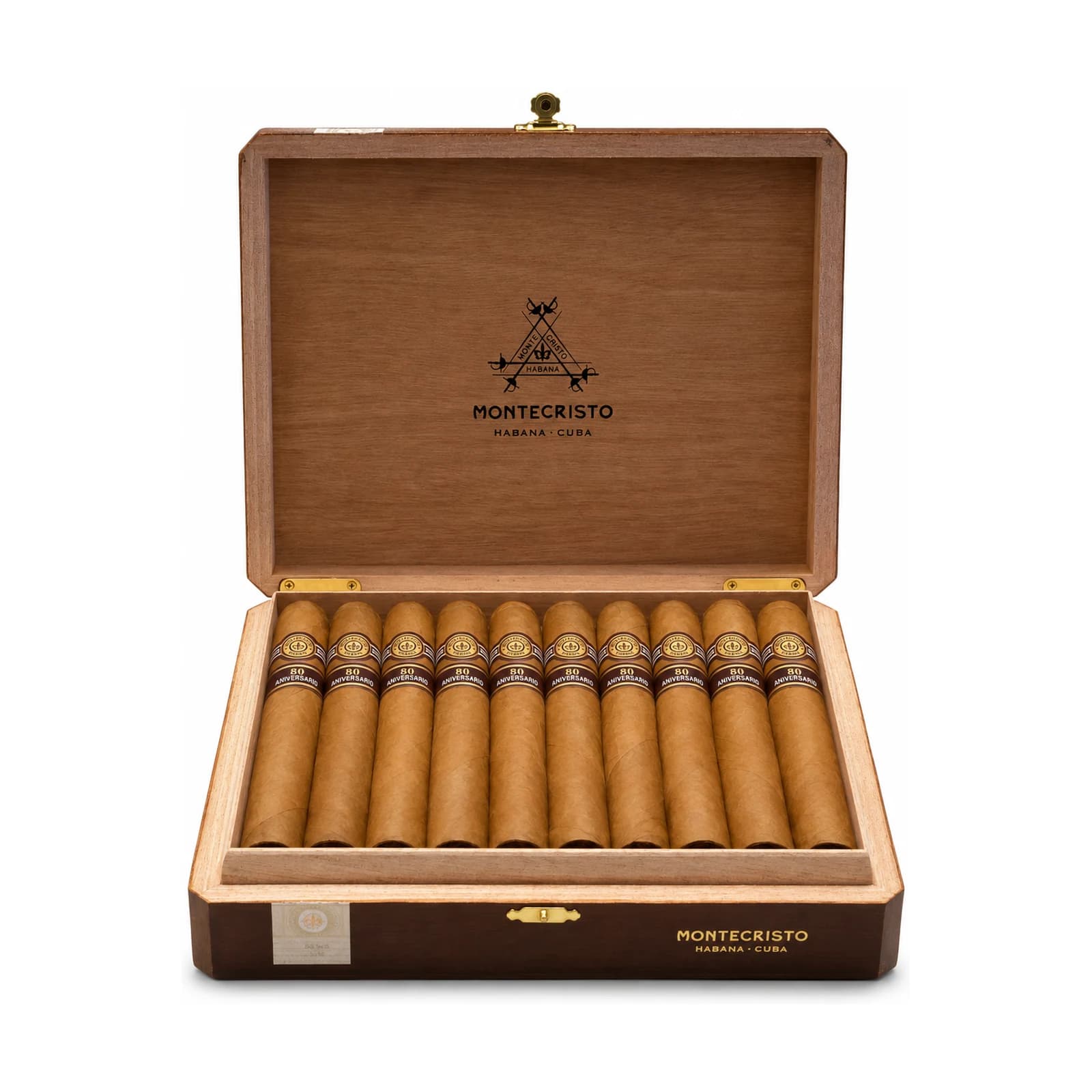
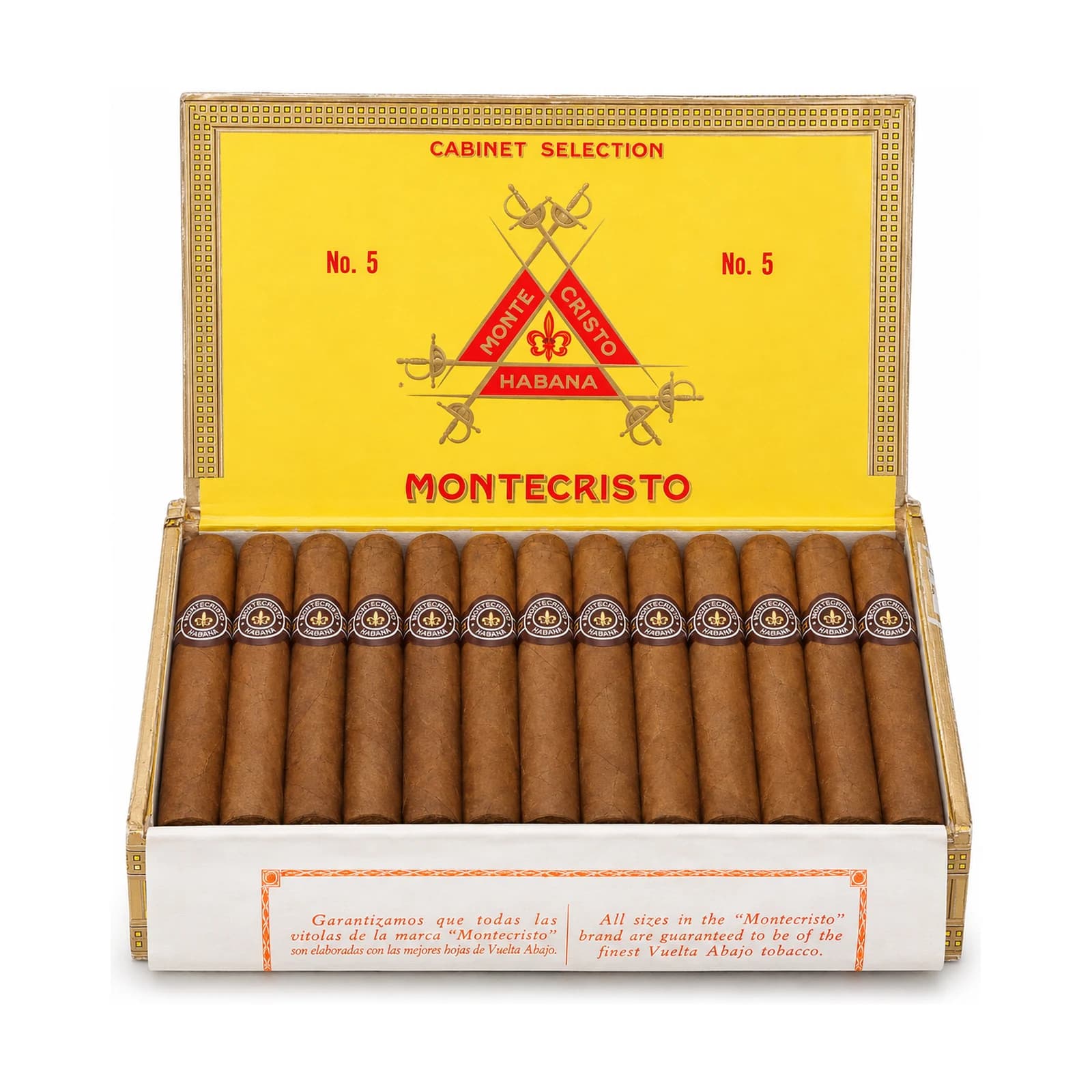
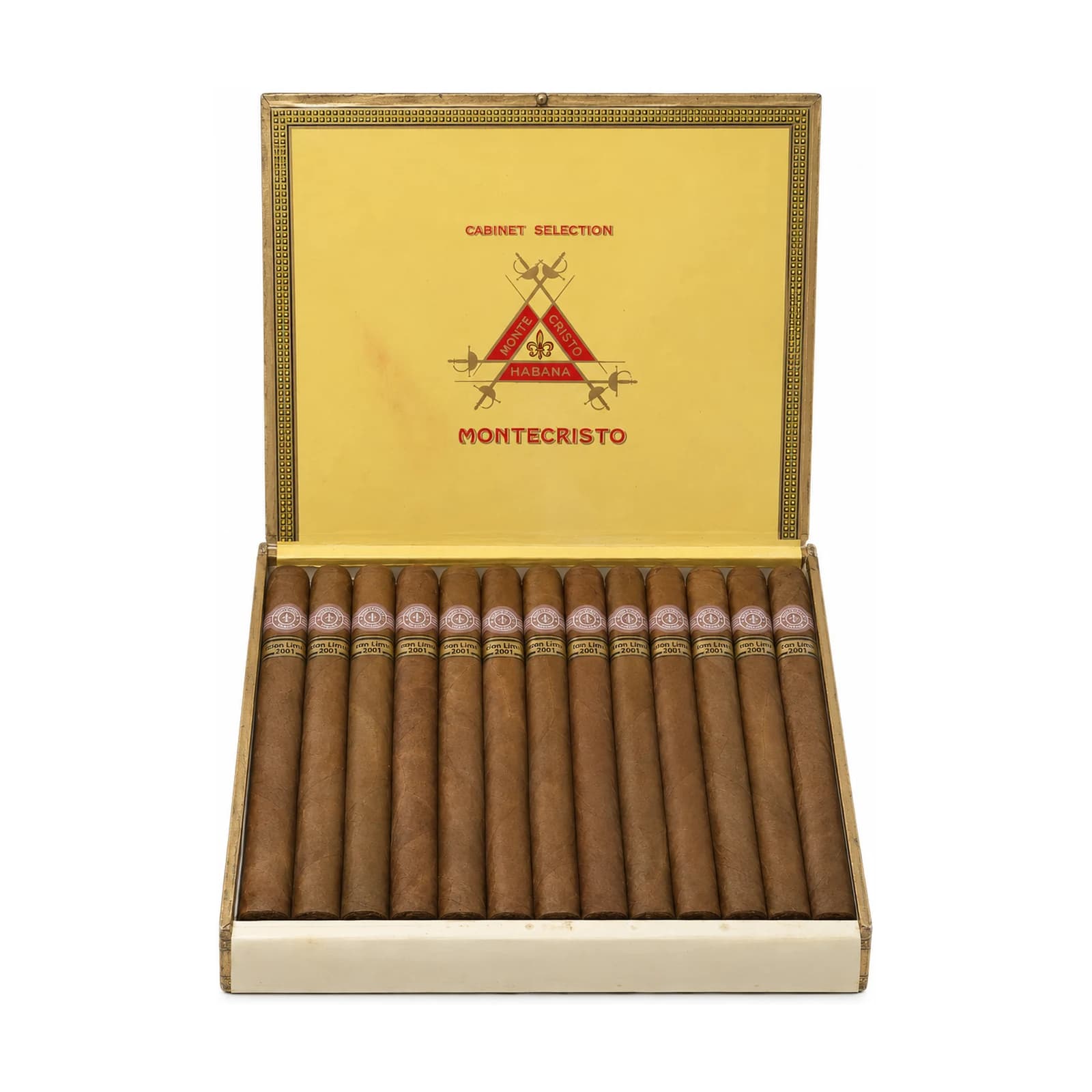
Montecristo's emblem is easy to recognise: a fleur-de-lis shape combined with crossed swords, set in a triangular arrangement on the band and box. The design is typically printed in a restrained palette of white, yellow and brown, which gives the packaging a sober, classic look. It is one of the more consistent brand images in the Cuban category, and it has changed very little in outline over the years.
That consistency has made the emblem a familiar reference point, and smokers tend to associate it with a particular flavor family and standard of construction.
The numbered system
Montecristo uses a numbered naming system for its core range, from No. 1 to No. 5, with a separate Edmundo and other special sizes alongside. The most famous number is the No. 4, a small corona that is commonly cited as one of the best-selling Cuban cigars of all time. The No. 2 is a pyramid-shaped size often regarded as an icon of the figurado category. Because each number refers to a specific vitola, learning them is a useful short course in size and shape.
Beyond the core range, the brand has expanded through additional lines, including series with different blends and presentation styles. These lines have changed over the years, so check the current catalog of the producer for the most reliable list.
House style
The Montecristo house is typically described as medium to full-bodied, with earthy, woody and slightly spicy notes. Cedar, cocoa, a faint salty or mineral edge and a long finish are common descriptors, although experiences vary with the size and the age of the cigar.
The style is often considered balanced rather than extreme. A Montecristo is expected to be consistent, which is why many people treat it as a reference point when learning to distinguish brands. Compared with a more delicate house, it can feel a bit more direct, and compared with the strongest names it tends to be more approachable.
Shape and the smoking experience
The range is a good place to study how shape changes a cigar. The same house character can feel different in a compact corona than in a tapered pyramid, because the way the smoke concentrates and the speed of the burn shift with the vitola. Trying two or three sizes in the same brand, with similar rest in the humidor, is one of the simplest ways to learn this.
Authenticity and care
As with any famous brand, imitations circulate. Learning the features of genuine packaging and handling cigars correctly after you get them matters more than any single trick. Store them at a stable temperature and humidity, avoid sudden changes, and give them time to settle after travel.
Comparing it with other houses
Montecristo is often used as a benchmark because it sits near the centre of the fuller Cuban range. Against Romeo y Julieta it is usually described as more direct and earthy, and against Partagas as a little more restrained. Such comparisons depend on the size and age of the cigars, so they are best tested rather than trusted.
Frequently asked questions
Why is it called Montecristo?
The name comes from the novel The Count of Monte Cristo by Alexandre Dumas, a story traditionally read to workers in Cuban cigar factories.
What is the Montecristo No. 4?
It is a small corona-sized cigar in the core numbered range and is often cited as one of the most popular Cuban sizes ever made.
Is Montecristo strong?
It is usually described as medium to full in body. Strength depends on the line and the specific size, so the label alone is not a complete guide.
Related reading: Partagas: history and house style and Romeo y Julieta: history and house style.
Reader questions
Questions & answers
No questions yet. Ask the first one.