Brand history
Partagas: history and house style
Partagas is one of the oldest and most historically significant Cuban cigar brands, founded in the nineteenth century in Havana. It is known for its full-bodied, earthy style and for a factory that has become a landmark in its own right. This article covers the brand's origins, its notable lines and what the house style tends to taste like.
Origins and the founder
The brand is attributed to Jaime Partagas, a Catalan who settled in Cuba and built a tobacco business in Havana in the 1840s. The date most often given is 1845, although some sources vary. His factory on a central Havana street became one of the most important in the city, and the building is still associated with the brand today.
The founder's name and the factory's reputation became closely linked. After the founder's death, ownership changed hands over the years, and the brand continued to operate as an established name in the industry.
The factory
The Partagas factory is among the best-known cigar workplaces in Havana. It has long been described as a place where large numbers of rollers worked in a traditional setting, and it has been the subject of many visitor accounts. The historic building behind the Capitolio was closed for a long restoration in the 2010s, with production moved elsewhere in Havana. Because the factory is closely tied to the brand image, many people think of the building when they think of Partagas, a connection that few other brands have.
The tradition of the lector, who reads to the rollers as they work, is often mentioned in connection with Havana's big factories. It is part of the cultural background in which names like Partagas grew.
Main lines and sizes
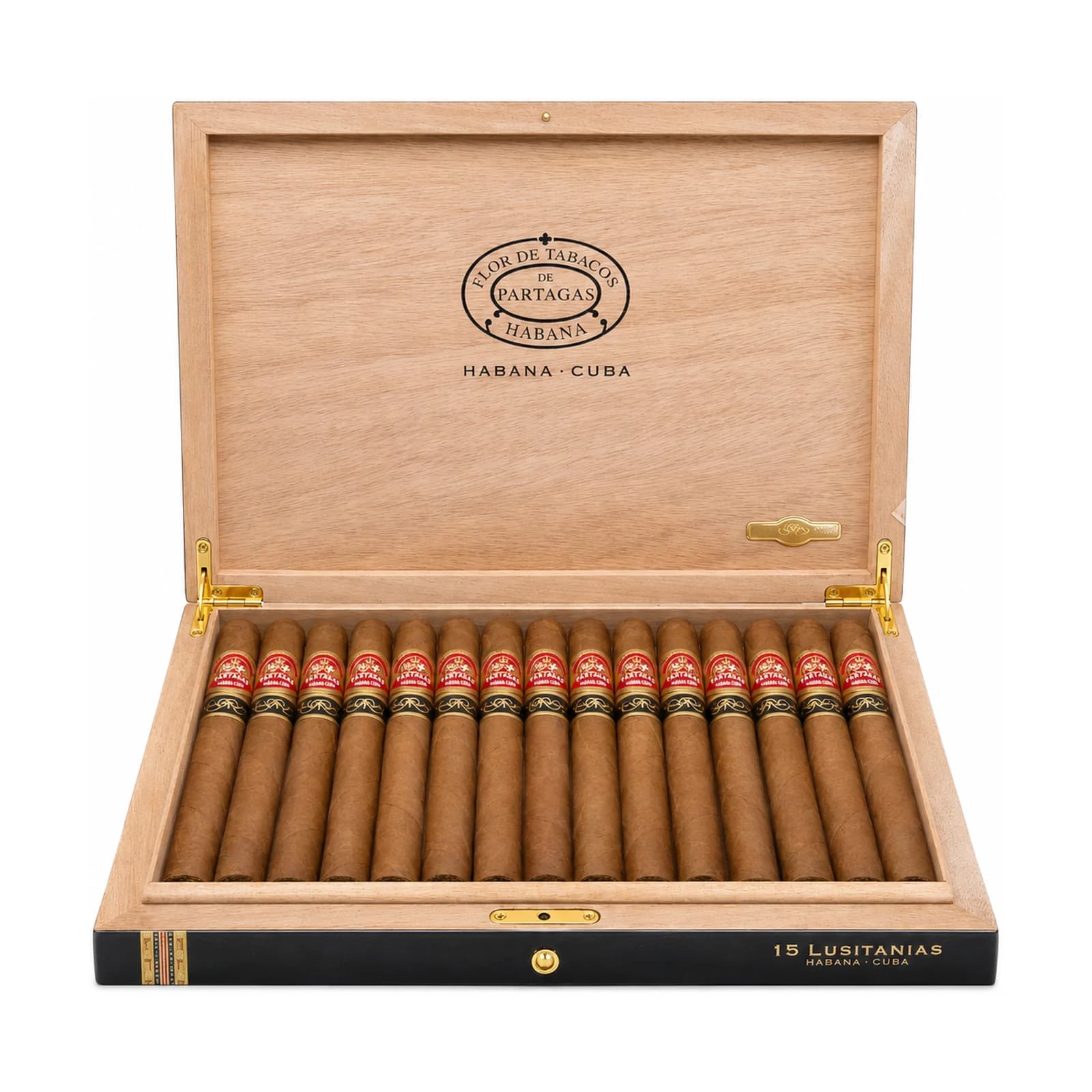
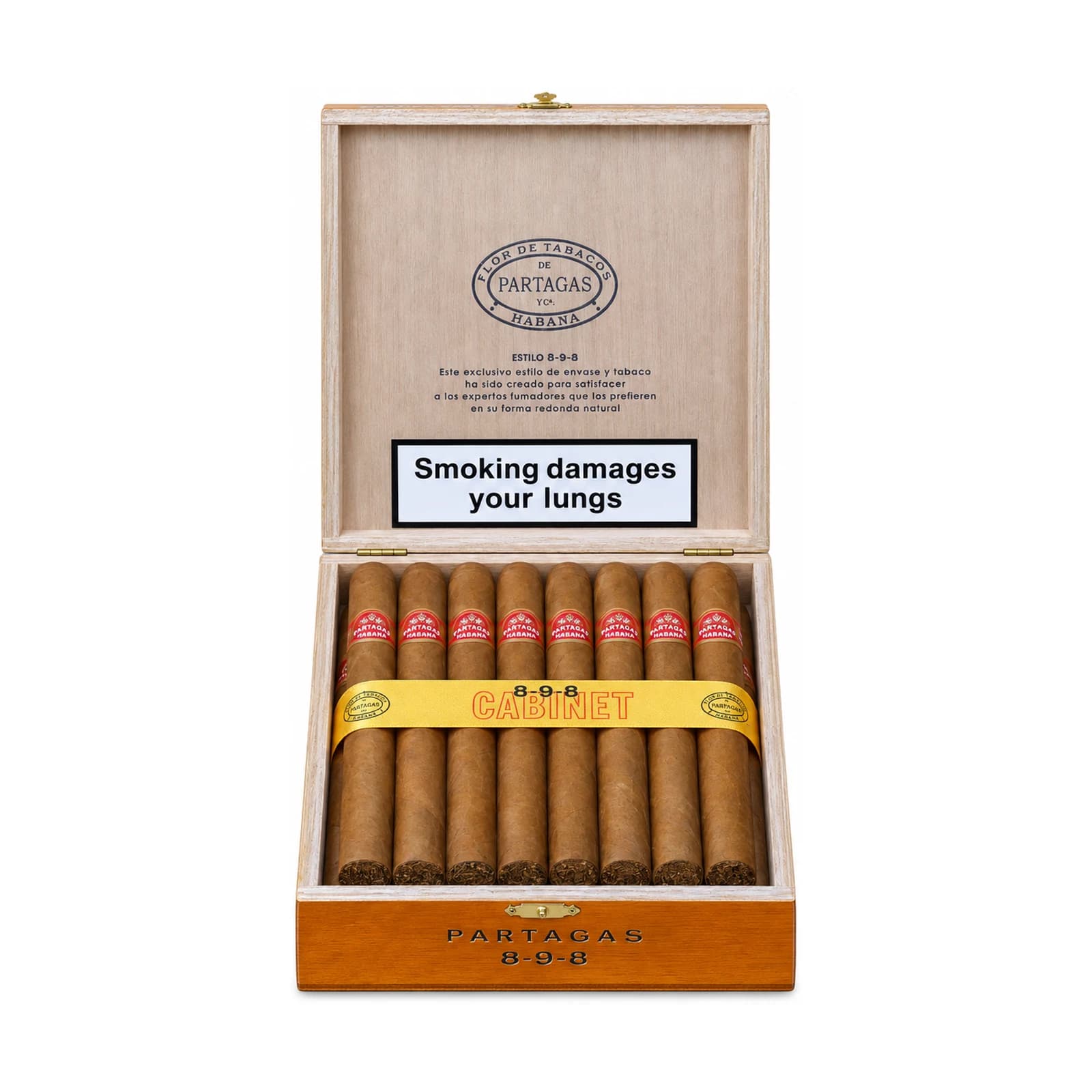
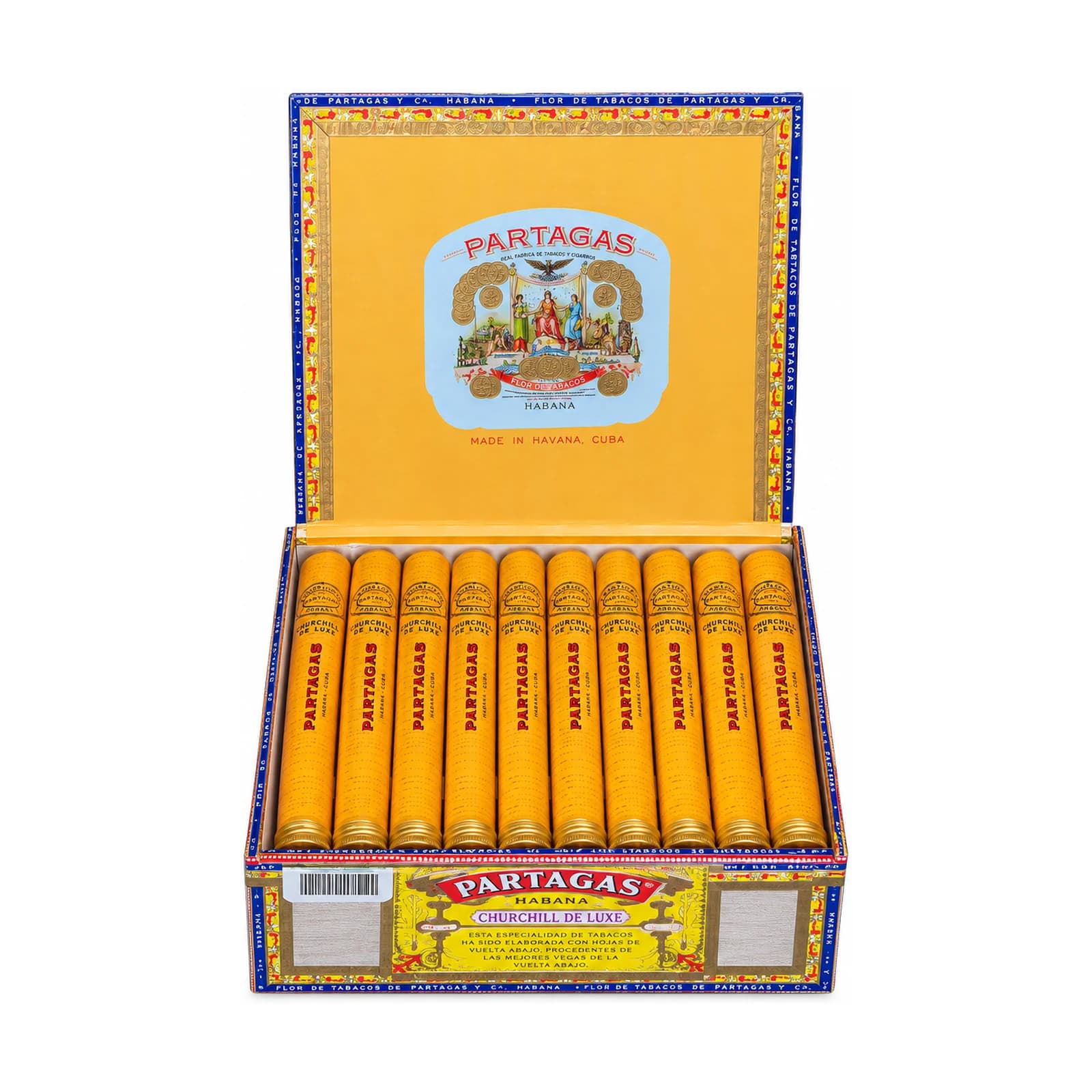
Partagas has a broad catalog. The Serie D No. 4 is a robusto-sized cigar that is regularly named among the most popular modern Cuban cigars. Other notable names include the Lusitanias, a large format, and the Partagas 8-9-8, whose name refers to the way its 25 cigars are packed in rows of eight, nine and eight. The range also includes lines with different blends and sizes introduced over the years.
Because the catalog is large, always look at the vitola name along with the line name. The same brand can offer very different smoking times, from a compact size to a long and thick one.
House style
Partagas is commonly described as full-bodied, with earthy, peppery and sometimes leathery notes. Tasters often mention a strong core with cocoa and spice, and a finish that lingers. The house is regarded as one of the more powerful Havana names, although individual cigars range from medium to full.
This reputation makes the brand a popular choice for those who prefer a bolder profile. For a new smoker, it can be useful to compare a Partagas with a milder house to understand how much body can differ between Cuban brands.
How to approach it
Because of its strength, many enthusiasts recommend smoking Partagas after a meal rather than on an empty stomach, and taking time between draws to avoid overheating the cigar. Proper humidor storage also helps the blend show its full character.
Patience pays off with fuller cigars in general. Letting a box rest, keeping a steady humidity and smoking slowly will tell you more about the blend than any description can.
Comparing it with other houses
Set beside a gentle house such as Romeo y Julieta or H. Upmann, a Partagas usually shows more pepper and earth in the opening third. Set beside a refined prestige line, it feels less polished and more rustic. None of these contrasts is a ranking. They are simply different answers to the same question of what Cuban tobacco can taste like.
A helpful method is a three-cigar flight in the same size, ideally robusto, with one mild, one medium and one full house. Smoke them on separate days, rest each cigar equally, and write down the first impression, the middle and the finish. The differences tend to be clearer than any description in print.
Frequently asked questions
Who founded Partagas?
The brand is attributed to Jaime Partagas, a Catalan who built a tobacco business in Havana in the 1840s. Some sources vary on exact dates.
What is the Serie D No. 4?
It is a robusto-sized cigar from the Partagas range, often cited as one of the most popular modern Cuban cigars.
Is Partagas a strong cigar?
It is generally described as full-bodied, though the strength varies by line and size. It is often considered one of the bolder Havana houses.
Related reading: Romeo y Julieta: history and house style and Hoyo de Monterrey: history and house style.
Reader questions
Questions & answers
No questions yet. Ask the first one.