Guides
Fidel Castro and the birth of Cohiba
Cohiba is Cuba's most famous cigar brand, and its early history is closely tied to Fidel Castro, who led the Cuban government after the 1959 revolution. The brand began in the 1960s as a cigar made for a restricted circle and was released to the public in the early 1980s.
Beginnings in the 1960s
According to the commonly told account, the brand that became Cohiba started around 1966 as a cigar made for Castro and his close circle. It was produced in a small workshop in Havana rather than in one of the large traditional factories.
The details of how and why it began are retold in several versions, and some elements rest on recollection rather than documents, so they are best treated as the accepted story rather than settled fact.
The name Cohiba
The word Cohiba is generally linked to the Taino language of the Caribbean's indigenous people, where it is understood to refer to tobacco or to a rolled bundle of tobacco leaves.
Choosing a Taino word tied the brand to the island's pre-Columbian tobacco heritage, a theme that appears often in Cuban tobacco marketing.
From private use to the public
Cohiba was reportedly offered as a diplomatic gift and given to visitors before it went on general sale. It was launched commercially in the early 1980s, bringing a brand once reserved for a few into the wider market.
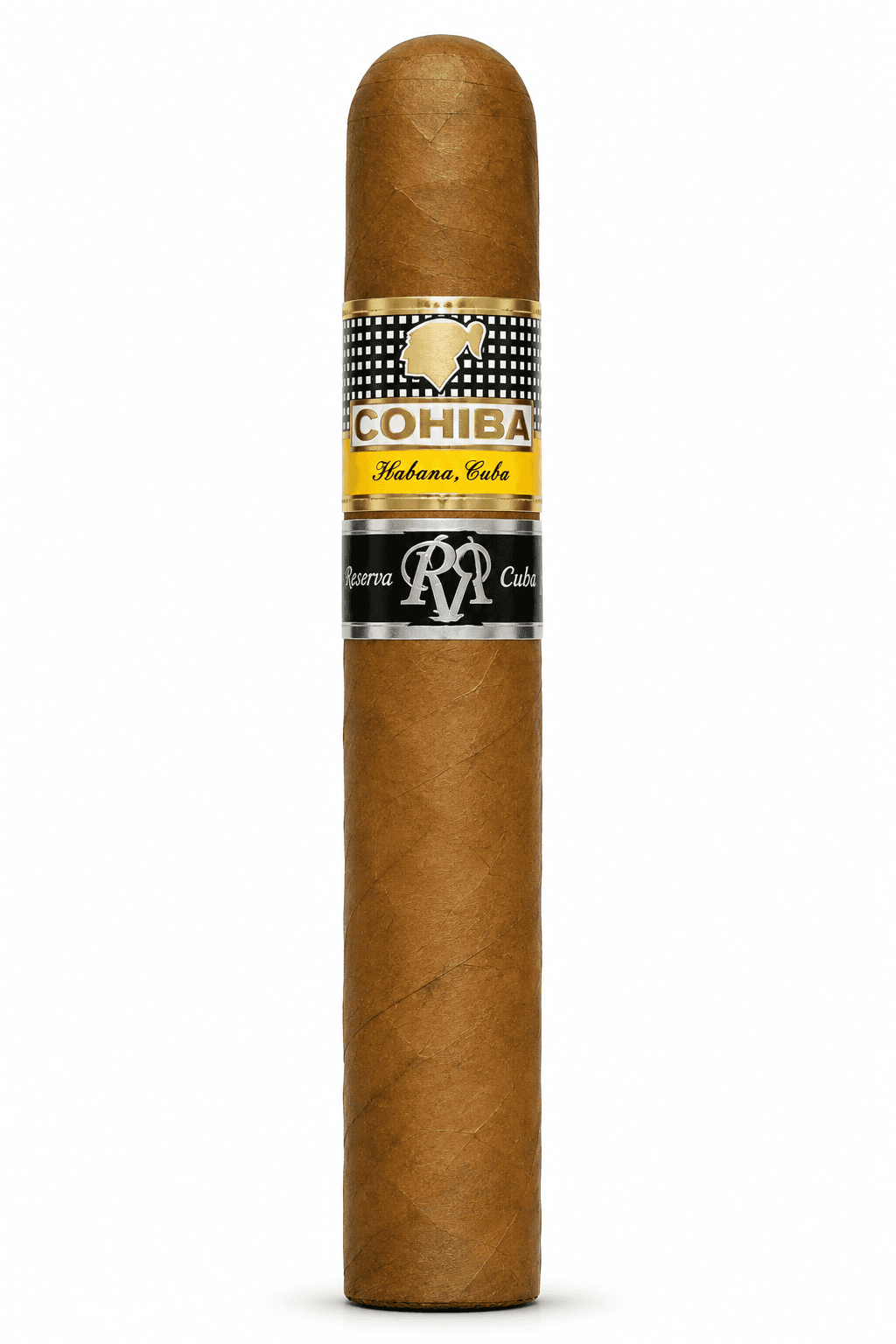
This shift changed its profile. Cohiba became a flagship of Cuban cigars, and its band, with a geometric yellow, white and black chequered pattern, is among the best known in the trade.
Where it was made
Production is associated with the El Laguito factory in Havana, a former residence that was converted into a workshop. Over time, Cohiba production expanded, and the brand grew its range of sizes and lines.
The factory's role is covered in its own article in this wiki.
Fidel Castro's own smoking
Castro was often seen with a cigar in public for decades, and he is widely reported to have stopped smoking in the mid-1980s. After that, the Cuban cigar industry continued to promote Cohiba as a global ambassador of the island.
The man and the brand therefore have a connected but distinct history: the brand has outlived its original circle and is now sold and discussed worldwide.
Cohiba and the revolution's cigar industry
After 1959, Cuba's tobacco industry was reorganised under state control, and brands were managed by state enterprises. Cohiba emerged within that structure, and its development reflects how the new system approached branding and export.
The 1990s brought new commercial arrangements for marketing Cuban cigars abroad, and Cohiba became a central part of that effort, associated with premium quality and limited availability.
A brand with its own identity
The brand's visual identity is distinctive: a bold, geometric pattern on the box and band, designed to look different from the ornate labels of older houses. That contrast reinforced the idea that Cohiba was a new kind of Cuban cigar.
Today, collectors, aficionados and writers discuss Cohiba mainly through its blends, its size ranges and its place in Cuban cigar history, rather than through politics alone.
Sizes and the first vitolas
The brand's early range is usually described as having a small number of sizes, with names that cigar fans still recognise. Over the years the range grew to include more formats and special releases, some presented at the annual Habanos Festival.
Because vitola names, dimensions and release dates are easy to misquote, anyone researching a specific Cohiba should check the current official listing or a trusted reference rather than rely on memory.
How to read the brand's story
The Cohiba story mixes documented facts with retold memory. The launch in the early 1980s and the brand's later global profile are well established, while the earliest private period is more often described through anecdotes.
A useful habit when reading about Cuban cigars is to separate what comes from official brand material, what comes from journalists and what comes from personal recollection. Each has value, but they carry different levels of certainty.
Frequently asked questions
Did Fidel Castro create Cohiba?
The usual account is that the brand began in the 1960s as a cigar made for him and his circle, though the details differ between tellings.
What does the word Cohiba mean?
It is commonly linked to the Taino word for tobacco.
When did Cohiba go on public sale?
It was released to the public in the early 1980s, after years as a restricted cigar.
Reader questions
Questions & answers
No questions yet. Ask the first one.